Kouré is now the world’s largest giraffe reserve. This is the story of a human and animal adventure at dusk.
The Kouré Epic
An Unexpected Sanctuary
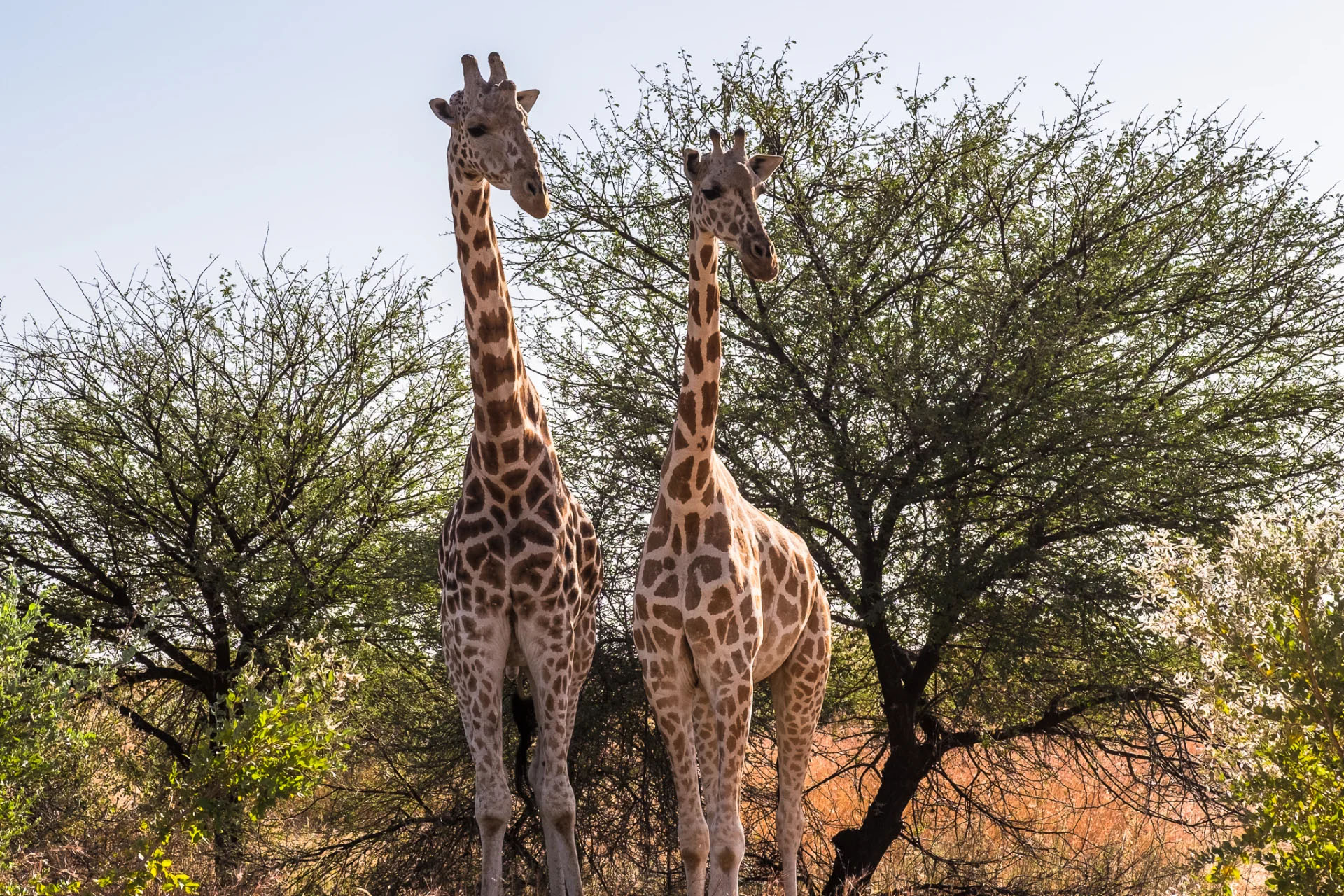
The West African giraffe population was threatened with extinction. Only 49 remained in 1996. Yet they migrated on their own towards Niger, between the Kouré plateau and the Dallol Bosso valley. Their instinct guided them well: in this country they have no natural predators.
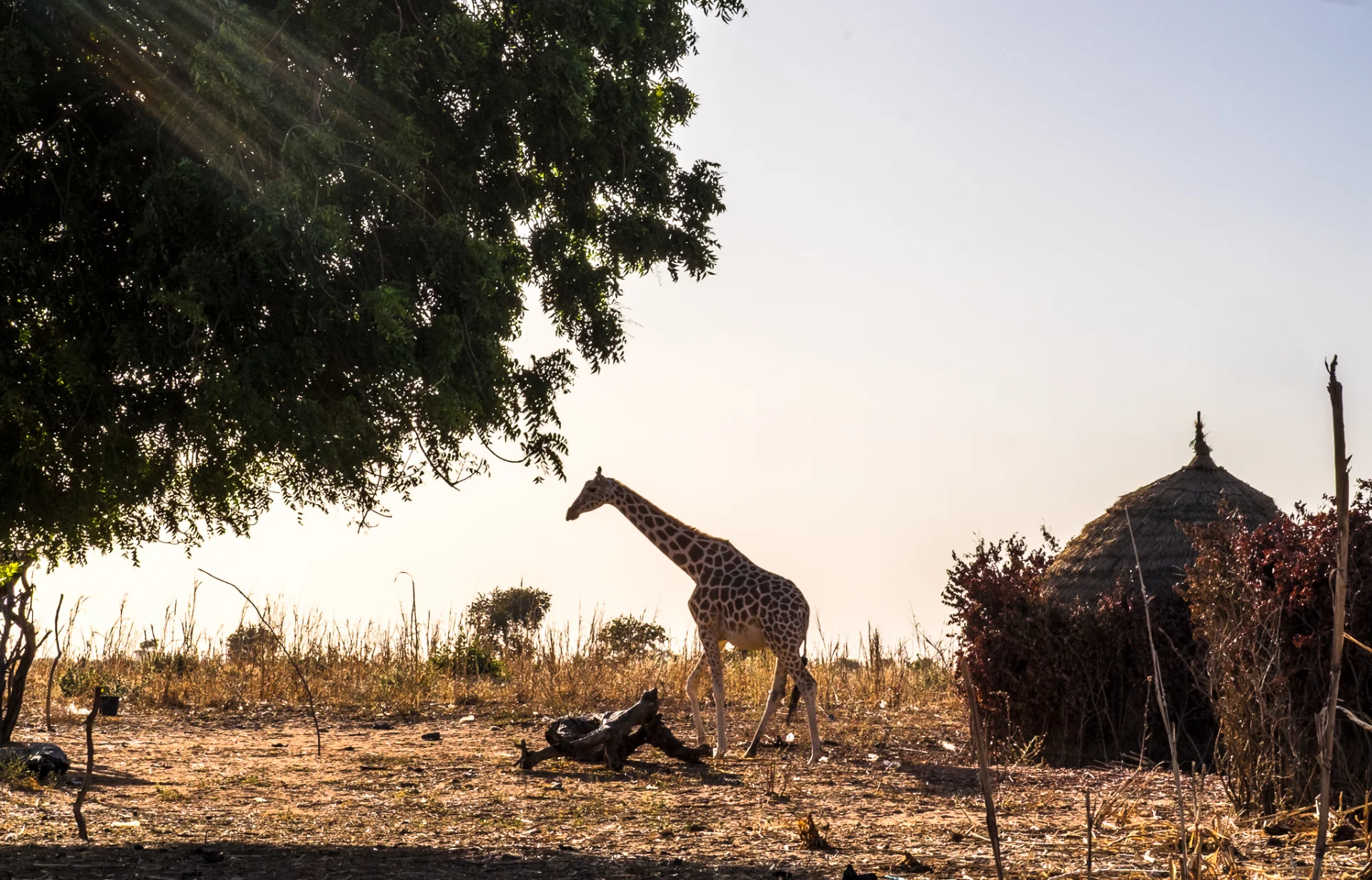
Today, there are said to be more than 1,000 individuals. Kouré is the largest giraffe reserve in the world. Protected from hunting as well, they live peacefully alongside the small villages that still survive across this 40,000 km² expanse of wilderness.
It is thanks to the combined action of local communities, government and the support of projects such as the Association for the Protection of Niger’s Giraffes, ASGN, the Association for the Promotion of Ecotourism in Niger, AVEN, and more recently the Giraffe Conservation Foundation and the Sahara Conservation Fund, that the territory is classified by UNESCO as a Biosphere Reserve.
The Adventure Begins
This reportage was commissioned by the Tunisian-Belgian-Luxembourg Chamber of Commerce, CCTBL, which wanted to produce a catalogue in partnership with 1001Tunisie. Here is the story.
I left quickly, without a visa... I was told that I was invited by the government and would be welcomed “with great ceremony” at Niamey airport, in the Ambassadors’ lounge. Well, I was not entirely convinced, but I left anyway: the call of nature.
The flight was at night. I arrived at four in the morning in crushing heat. The airport was tiny. I asked for the lounge and was told, with surprise, that there was none. I found myself outside with my suitcase, no contact, alone, in very little light. After about an hour, two young men approached with an A4 sheet carrying my name, barely legible. They had been waiting 200 metres away, assuming I would spot the sign. So at last I was taken in hand. Fortunately, they were genuinely kind and welcoming.
They dropped me at the hotel. In bed at five, awake at seven, meeting at eight. Not exactly fresh, but ready, I thought I would withdraw some money from an ATM in the hotel. 10,000 CFA francs, about 50 dinars... Then I waited for the team.
Tensions and Misunderstandings
At 10:30, the agent from the previous evening arrived with the guide and driver. But there was tension: constant phone calls, irritated voices. I understood that the team, park, driver, food and drinks all had to be paid in advance. And I was waiting, exhausted after almost two sleepless nights. On the off chance, I asked how much was needed: 10,000 CFA francs. I am not joking.
I took the phone to get an explanation. I admit I lost my temper a little, as I sometimes do, and said sharply that I would pay and that we were leaving for the reserve immediately. I had work to do and only two days. Then I hung up. I later discovered that I had been speaking to the Minister of Agriculture. Never mind, we left. Still irritated, my guide calmed me down by joking. In fact, the minister was his father.
Into the Vastness of the Park
So off we went in convoy, for security. We stopped at the market to buy food: dried goat meat in small pieces with salt and pepper, and fruit. Too bad about the vegetables.
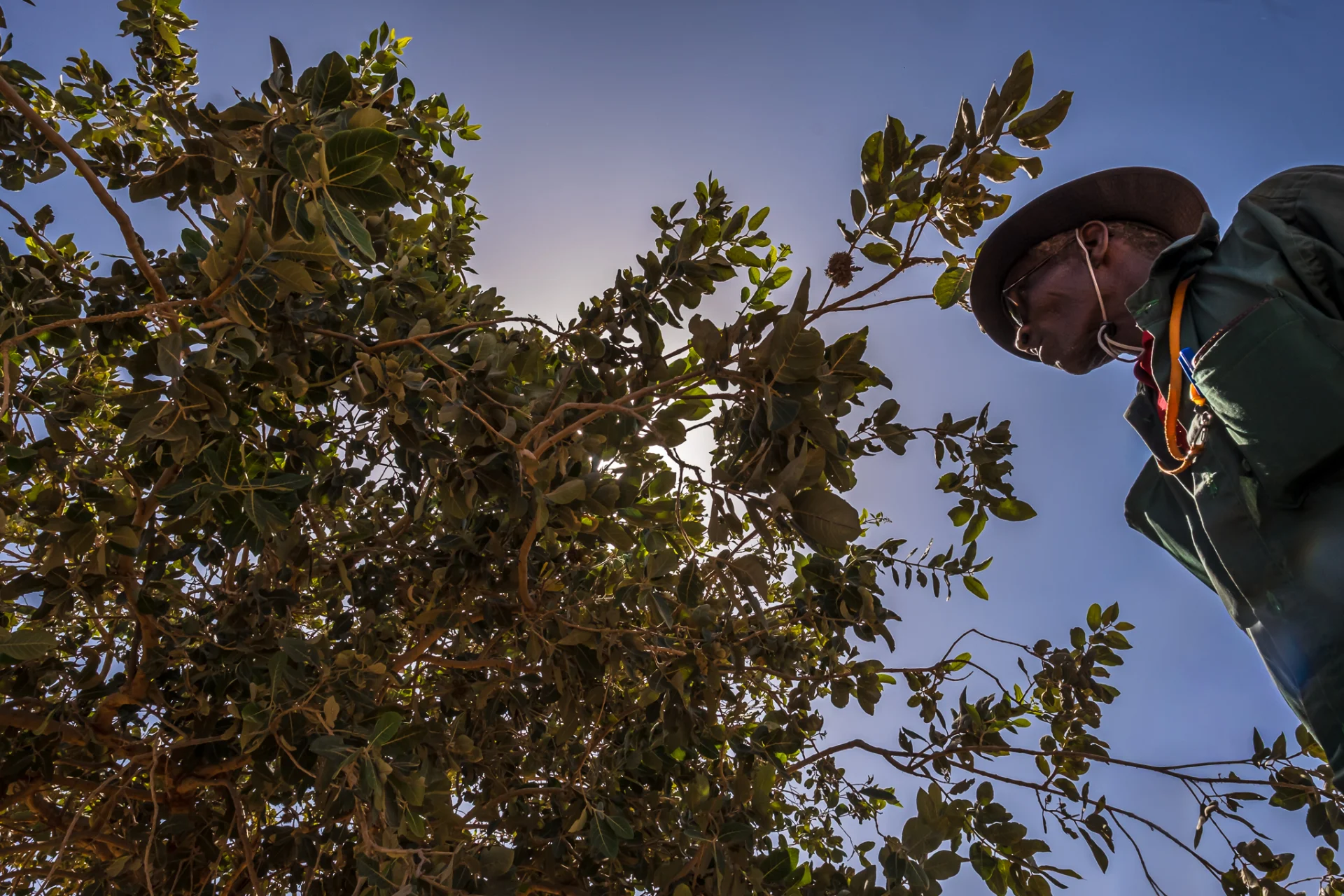
The park is immense. In the end it was just us in a 4x4 pick-up. I sat in the back with the park guide, an extraordinary, quiet man who hardly spoke but had a very gentle charisma. He carried a long, thin stick and, standing upright, directed the vehicle. He looked far into the distance and used the stick to point out the direction for the driver. It worked remarkably well.
First Encounter
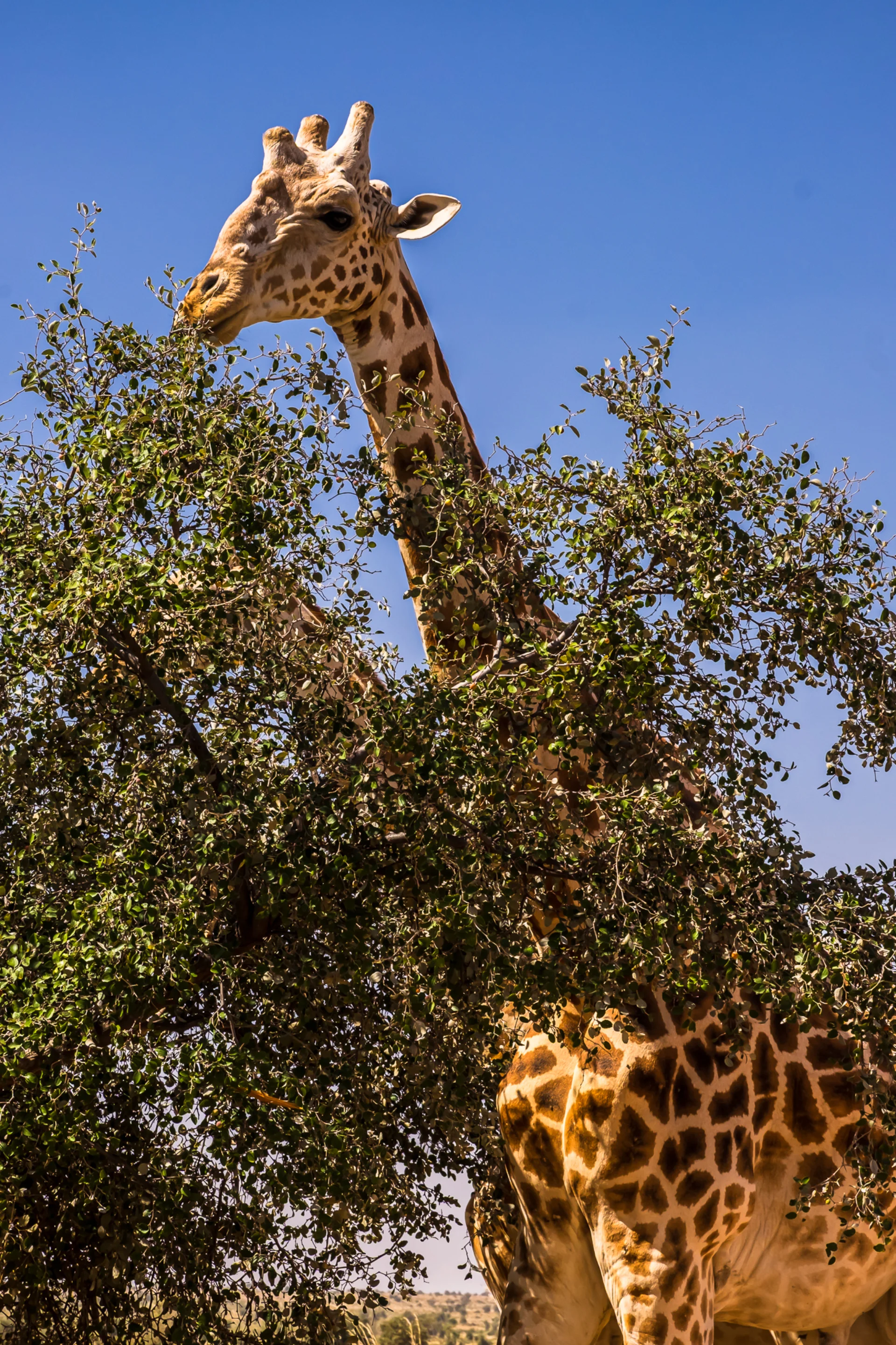
We found the first giraffe family. They are very difficult to locate. I asked to stop at a good distance because I needed to get around to the other side of the herd for the light to fall correctly. And yes, I photograph almost constantly against the light. Walking slowly, I began making contact with the giraffes, which watched me from afar. I moved gently, looked at them directly but without holding their gaze too insistently, circled them and gradually came closer. They did not move and continued browsing calmly on the acacias.
At last I made a few photographs. Then a minibus came straight towards us, rather too quickly. Eight people got out with tripods, bags and reporter costumes, making a great deal of noise: amateurs playing at being professional safari photographers. Not my thing. The giraffes did not appreciate it either and left. Although they appear to move slowly, they cover ground quickly, and we lost them. Thank you, crowd. The guide said it would take two or three hours to find them again. Clever.
We decided to find a reasonably large tree and eat in the shade. We opened the bag of meat on the bonnet and picked at it. Not the finest first meal. Never mind. It gave us time to get to know one another. Everyone was pleasant, calm and funny.
The Forbidden Village?
I learned that there were villages inside the reserve. I asked, shall we go? I wanted to meet the inhabitants. They told me that it was impossible and, above all, undesirable. The villagers did not like tourists and were supposedly wild, even aggressive. I insisted, and they “bravely” left me 300 metres from the entrance to a small group of mud-brick houses.
But I will tell the story of those people in another reportage devoted to them. It became one of the great moments of my life.
The Little Evening
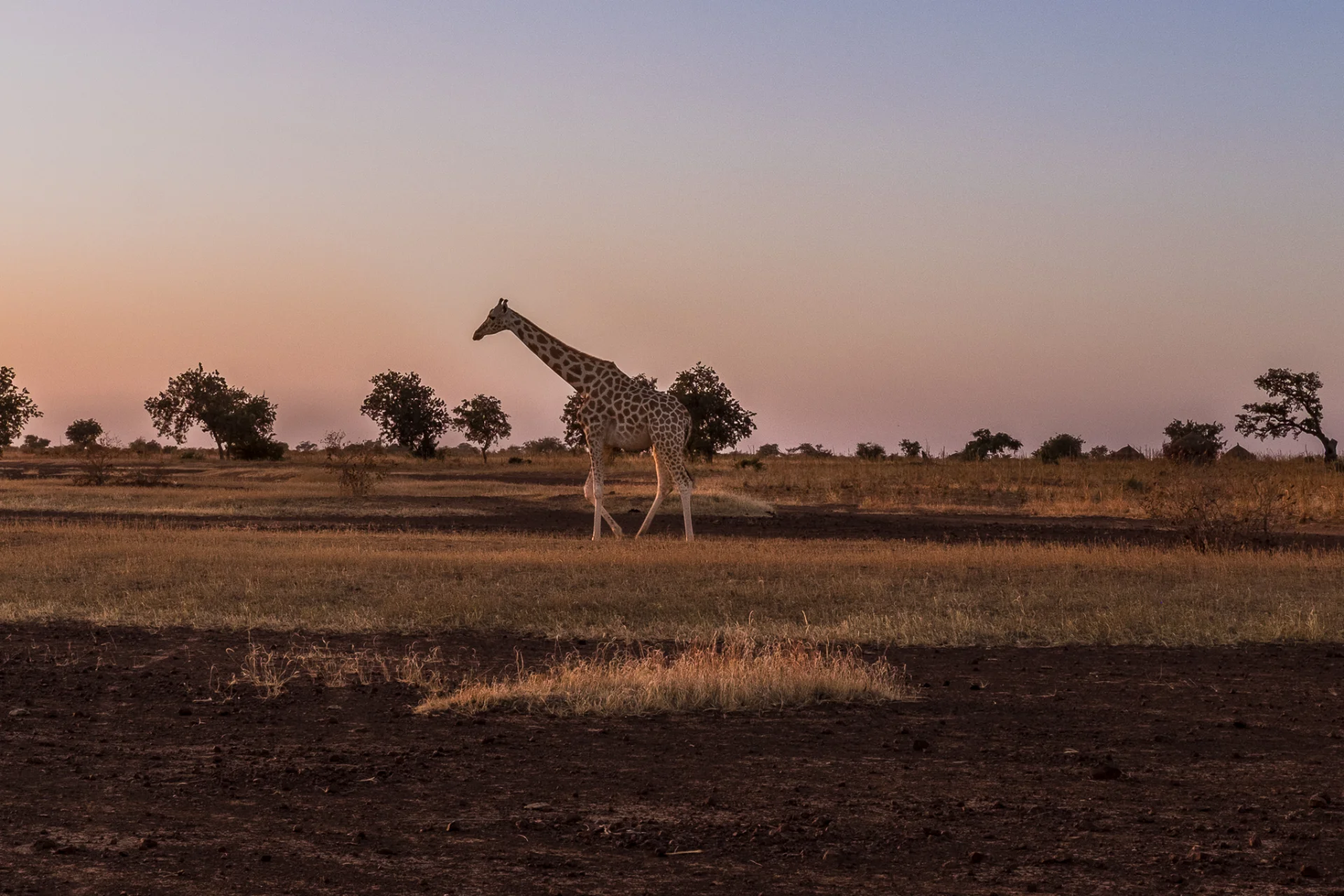
We resumed the adventure as the sun began to drop. Good: in addition to backlighting, I needed a sunset. Piero knows what he wants. After two hours we found our group again. I got out alone and approached. The park guide could see that the giraffes had accepted me, so he left me on my own. I was delighted. Alone in the landscape with the giraffe family. What a feeling of peace. For me, being in a particular state of mind is essential to photography. At that moment, everything was right.
There are looks that do not deceive. Giraffes are curious. By chance, for a second time I had found the same family. There was the enormous dominant male, several females and other males, and the young. Giraffes are polygamous. The dominant male has priority for mating, but not exclusivity. There is no couple. Each female raises her own offspring.
I stayed with them for two hours. It was fascinating and I lost all sense of time. The relationship felt so strong. The guide came to find me. He wanted to leave, and so did the team. I negotiated: if we stayed until after sunset, we would not need to come back the next day. A good argument. They agreed.
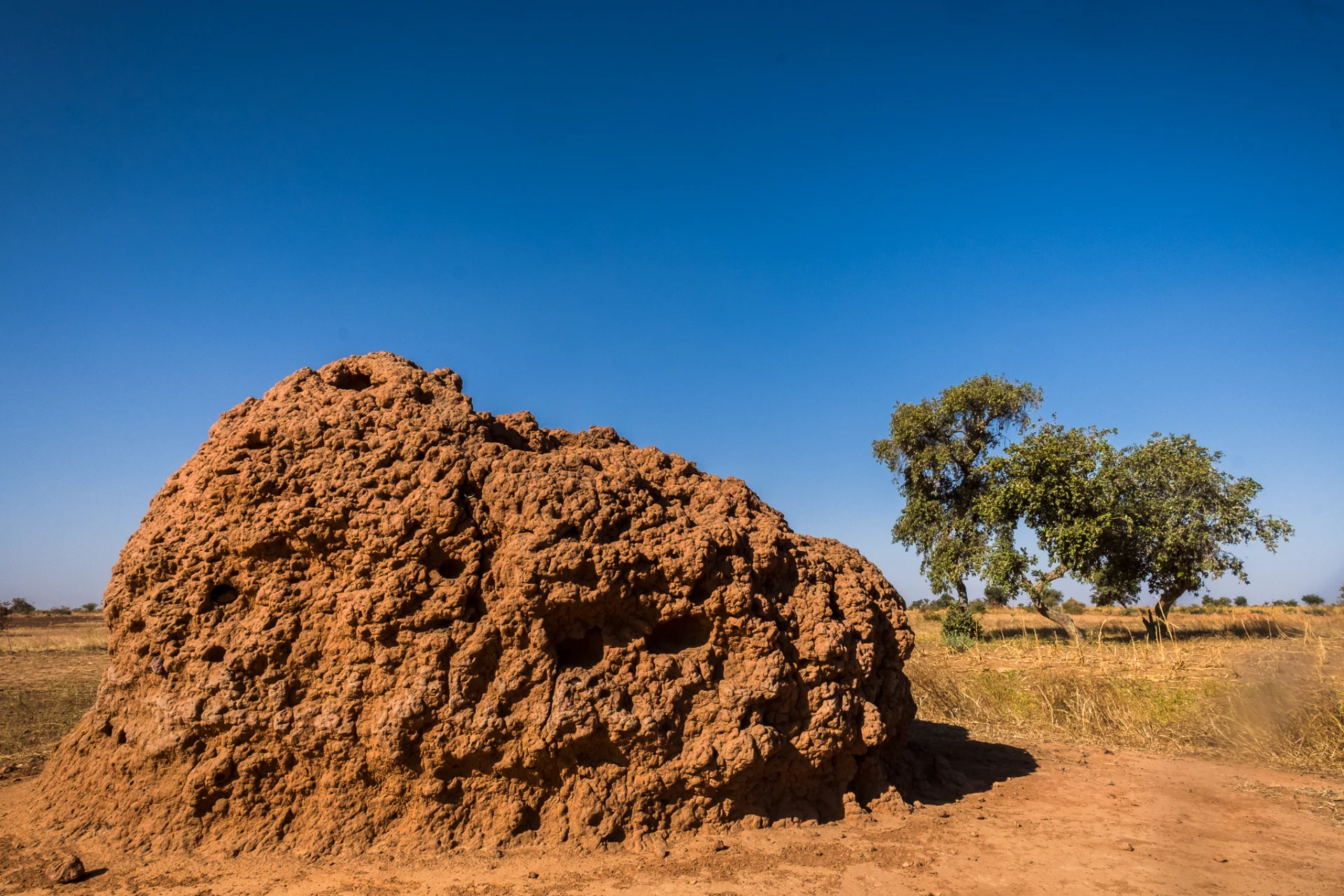
I finally discovered what is called the “little evening”: the time after the sun has gone down, before night. In some parts of Africa, the little evening lasts a long time. That day it did. The light was sublime: warm, muted, enveloping, coppery, blood-red. Everything changed. The landscapes came alive again. We ended the day beside a few giant termite mounds, three metres high, without seeing a single termite.
Memories
Back at the hotel, a third sleepless night. With images like these inside me, it was impossible to calm down. Seven years later, they are still in my head. I was glad to have achieved everything in a single session, when three had been planned. Fortunately, because the next day became another adventure. The whole day was swallowed by administration: visa, identity photograph and piles of forms for the modest reimbursement of €50.
Fortunately my guide, the minister’s son, came with me and we got on extremely well. We are still friends. He told me about life in Niamey and showed me neighbourhoods, bars and restaurants. I would love to go back, simply to see him again and to photograph other subjects we had planned, but sadly this is not the right period.